Renovating a 2×4 House in Japan — Structural Limits
A Smith Realty Japan Structural Consultation Case Study
One of the most important questions rarely asked when purchasing a house in Japan is also one of the simplest: What structural system was used to build the home?
Most buyers focus on location, land size, zoning, road access, and the age of the building. These factors are important, but the structural method used to build the house can have a major influence on what is actually possible when renovation begins.
Smith Realty Japan recently encountered a situation that illustrates this clearly. A client approached us with a straightforward renovation request: installing a large Western-style bathtub — a 66‑inch American tub — in the second‑floor bathroom of an existing house.
At first glance the request seemed simple. Bathroom upgrades are common renovation projects in Japan, and many homeowners prefer larger bathtubs than those typically found in standard Japanese unit bath systems.
However, once the structural system of the house was examined in detail, the proposal raised several concerns.
After reviewing the structure and evaluating the loading conditions, Smith Realty ultimately advised the client that the installation should not proceed as proposed. While we always aim to support a client’s vision, the structural realities of the building meant that proceeding would introduce risks we were not prepared to recommend.
Two Very Different Timber Building Systems
Most timber houses in Japan are built using one of two structural systems.
The first is 2×4 construction (wakugumi kabe kōhō), introduced from North America and widely used by large house manufacturers. The second is traditional Japanese post‑and‑beam construction (zairai kōhō), which uses vertical columns and beams to carry structural loads.
Both systems can produce safe and durable homes, but they behave very differently when renovation plans introduce new loads or structural changes.
A 2×4 house is essentially a wall‑based structural system. Loads are transferred through structural walls and floor joists spanning between those walls. Traditional post‑and‑beam houses instead transfer loads through beams and columns, allowing interior walls to function more as partitions than structural elements.
Renovation Flexibility
In a post‑and‑beam house, renovation flexibility can be relatively high. Interior walls may sometimes be relocated or openings expanded provided the primary beams and columns are respected.
In a 2×4 structure the situation can be more constrained. Interior walls often act as structural shear walls and the floor system relies heavily on the capacity of the joists spanning between load‑bearing walls.
This does not mean 2×4 houses are weak. Properly engineered 2×4 structures perform very well during earthquakes and are widely used internationally. However, they are less forgiving when renovation plans introduce concentrated loads that were not anticipated in the original design.
Reform & Renovation in Japan — structure, process, and project execution.
Subscribe to receive new articles from Smith Realty Japan.
The Client’s Request
The client wished to install a 66‑inch American bathtub on the second floor of the house.
Large Western bathtubs differ significantly from typical Japanese bathing systems. Most Japanese homes use modular unit bath systems that integrate the tub, walls, and waterproof pan into a single assembly designed to distribute loads evenly across the floor.
A typical Japanese unit bath may carry roughly 250–300 kilograms when filled and occupied. A large Western bathtub, however, may hold 180–220 litres of water. Water alone therefore weighs approximately 180–220 kilograms, and once the tub itself and the bather are included the total load can approach 400–600 kilograms concentrated within a relatively small footprint.
Structural Review
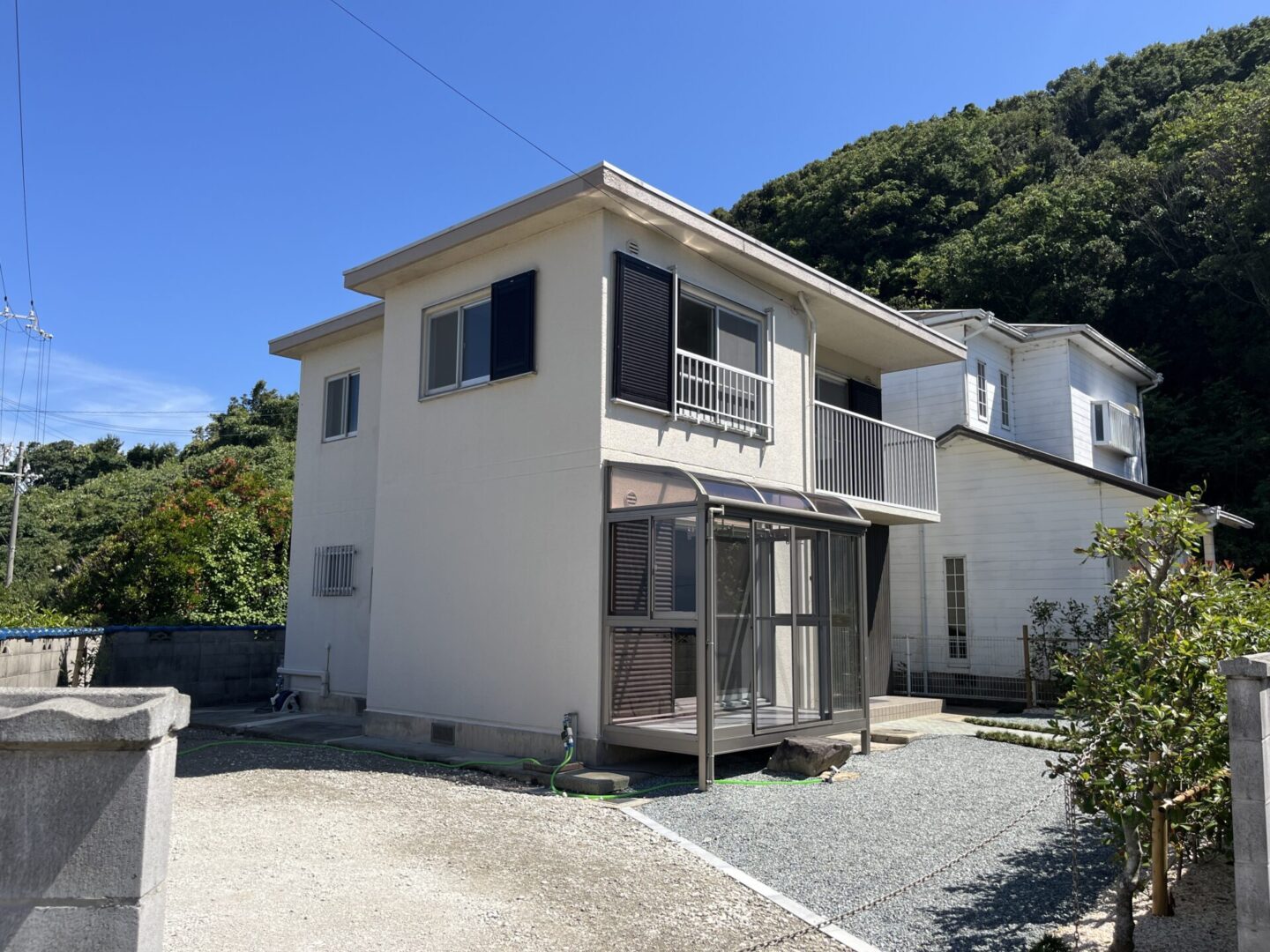
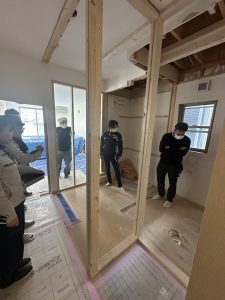
Smith Realty reviewed the available drawings and inspected the building. The house had been constructed using 2×4 timber framing. The second‑floor bathroom floor was supported by timber joists spanning between load‑bearing walls.
Under normal conditions the floor system was adequate. However, the introduction of a large Western bathtub raised several concerns. The load would be highly concentrated, the location fell near the mid‑span of the joists where bending stresses are highest, and installation would likely introduce additional framing and waterproofing materials.
While this situation might not cause immediate structural failure, it introduces the possibility of long‑term deflection or structural creep in the floor system.
The Bathroom System Problem
Japan’s bathroom industry is highly standardized. Manufacturers such as TOTO, LIXIL, and Panasonic produce unit bath systems in defined module sizes designed around typical Japanese construction practices.
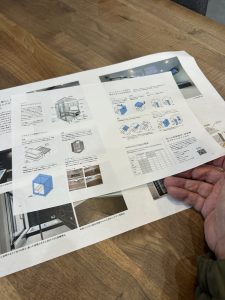
A 66‑inch American bathtub falls outside those standard modules. To accommodate the client’s request, suppliers proposed a custom unit bath system designed specifically for the oversized tub. The cost of the custom unit bath alone exceeded five million yen.
When Client Vision Meets Structural Reality
At this point the project reached a clear decision point. Smith Realty always works to support a client’s design goals, but renovation must ultimately respect the structural limits of the building itself.
Installing a large American bathtub on the second floor of this 2×4 house would have required accepting structural compromises and significant cost escalation. Even with reinforcement measures, the long‑term performance of the floor system would remain uncertain.
For that reason Smith Realty advised the client that we could not responsibly proceed with the installation as proposed.
Lessons for Buyers and Renovators
This consultation highlights an important lesson for anyone purchasing or renovating property in Japan.
Before planning major interior changes it is worth asking a simple question: what structural system was used to build the house?
If the building uses traditional post‑and‑beam construction, renovation flexibility may be relatively high. If the building uses 2×4 construction, modifications involving heavy fixtures or concentrated loads may require careful structural evaluation.
Consulting Note
Projects like this are exactly why many clients engage Smith Realty Japan before beginning renovation work. Structural systems, load paths, and building methods can significantly affect what is possible inside an existing home.
Learn more about Smith Realty Japan consulting services:
https://www.smithre.jp/consulting/
More Articles
A client approached us with a straightforward renovation request: installing a large Western-style bathtub — a 66‑inch American tub — ...
Author : Mark Smith
For many investors, purchasing land feels like the decisive step in a development journey. Once ownership is secured, the assumption ...
Author : Mark Smith
Author : Mark Smith
The Japanese building industry has transformed dramatically since the 1970s, driven by technological advancements, societal shifts, and the need for ...
Author : Mark Smith
Author : Mark Smith
At Smith&Co, we regularly work with two leading Japanese warehouse manufacturers, Kakuichi and Inaba. Based on decades of real estate ...
Author : Mark Smith