
Why Japanese Contractors Resist Custom Bathrooms in Wooden Homes (And How to Navigate It)
When East Meets West in Japanese Home Construction
Recently, a foreign client building a custom home in Japan came to me with a familiar concern. Their contractor was pushing back on installing a non-system bathroom on the second floor of a wooden structure. The contractor’s reasoning? Seismic safety concerns about potential water leaks damaging structural beams.
On the surface, this sounds legitimate. Japan experiences significant seismic activity, wooden structures need protection, and water damage to load-bearing beams could indeed be catastrophic. But after managing custom home projects for foreign clients in Japan long enough to know, I can tell you: this concern is rarely about structural engineering.
It’s about something deeper—and understanding that distinction is critical for anyone building a custom home in Japan.
What Your Contractor Is Really Saying
When a Japanese contractor cites seismic/leak concerns about a second-floor custom bathroom, they’re usually communicating one of several underlying issues:
1. Waterproofing Confidence (or Lack Thereof)
The real issue is often waterproofing expertise, not structural risk. Installing a fully waterproofed, non-system bathroom on a wooden second floor requires specialized skills:
- Proper membrane installation
- Fiberglass layering techniques
- Drainage slope calculations
- Integration with wooden subfloor systems
Many Japanese contractors excel at installing prefabricated unit bathrooms (system baths) but have limited experience with fully custom waterproofing. Rather than admitting this gap in expertise—which would be culturally uncomfortable—they cite safety concerns.
The “seismic risk” excuse provides a face-saving way to decline work they’re not confident executing.
2. Financial Pressure on Tight Quotes
Proper waterproofing isn’t free. While not prohibitively expensive, it adds cost:
- Specialized materials (membranes, fiberglass, sealants)
- Additional labor hours
- Potentially bringing in waterproofing specialists
If your contractor provided a fixed-price quote based on standard construction methods (system bath installation), custom waterproofing represents unbudgeted expense. Rather than requesting a change order—which risks losing the job or appearing more expensive than a competitor who may even be cutting waterproofing corners—they may prefer to simply discourage the custom approach.
This is especially true if they’re holding themselves to a competitive price point and worried about margin erosion. Waterproofing is one of those areas where corners can be cut invisibly—until problems appear years later.
3. Unfamiliarity Breeds Resistance
Japanese construction culture values proven methods and standardization. System baths dominate the market because they work reliably and everyone knows how to install them. Custom bathrooms—particularly Western-style walk-in showers without prefab units—remain relatively uncommon in standard residential construction.
That said, with our timber frame builds, second-floor bathrooms are pretty much standard practice. We’ve been doing them for years, and they perform reliably when executed properly.
When contractors encounter unfamiliar requests, their default response is often resistance. This isn’t malice or laziness—it’s risk management. Unfamiliar methods introduce unknowns:
- Will it pass inspection?
- Will it create warranty issues?
- Will the client blame them if something goes wrong?
- Will it damage their reputation?
The Cultural Layer: Why "No" Sounds Like "Safety Concerns"
Understanding Japanese business culture is essential here. Direct refusal—”I don’t want to do this” or “I’m not skilled at this”—is culturally uncomfortable. Instead, objections are often framed as concerns for the client’s wellbeing:
- “It might not be safe in an earthquake”
- “The building code might not allow it”
- “Other clients prefer the system bath”
This communication style serves multiple purposes:
- Maintains harmony (doesn’t directly contradict the client)
- Preserves face (doesn’t admit skill limitations)
- Positions the contractor as protective rather than resistant
For foreign clients accustomed to more direct communication, this can be frustrating. You know custom bathrooms work—you’ve seen them in Western homes for decades. But your contractor’s “safety concerns” seem to suggest you’re being reckless.
The disconnect isn’t about facts. It’s about communication styles.
How to Navigate the Resistance: Practical Strategies
So what do you do when your contractor pushes back on a custom bathroom (or any other Western design preference)? Here’s what I’ve learned from managing these situations:
1. Acknowledge the Concern (Even If You Know It's Not the Real Issue)
Start by validating their stated concern:
"I appreciate you thinking about seismic safety. That's definitely important. Can you help me understand what specific structural risk you're concerned about with proper waterproofing?"
This approach does two things: it shows respect for their expertise, and it gently invites them to articulate the technical specifics. Often, this is where the conversation shifts—because if the real concern is waterproofing confidence rather than structural engineering, they’ll struggle to identify a specific structural mechanism.
2. Offer to Bring in Specialists
On a recent project where we faced similar resistance, I brought in a waterproofing specialist to work alongside the general contractor. This accomplished several things:
- Addressed the skill gap without making the contractor feel inadequate
- Demonstrated commitment to proper execution
- Reduced the contractor’s perceived risk
- Provided a face-saving solution (“the client insisted on bringing in an expert”)
However, be sensitive about how you propose this. Framing matters:
❌ “You don’t seem confident, so I’m bringing in someone who knows how to do it.”
✅ “Since this is a special request from me, I’d like to bring in a waterproofing specialist to support the team and ensure everything meets the highest standards.”
3. Show Examples and Precedent
I’ve successfully used this strategy: showing contractors photos of completed second-floor custom bathrooms in other projects I’ve managed. This serves as proof of concept and reduces the “unfamiliarity” factor.
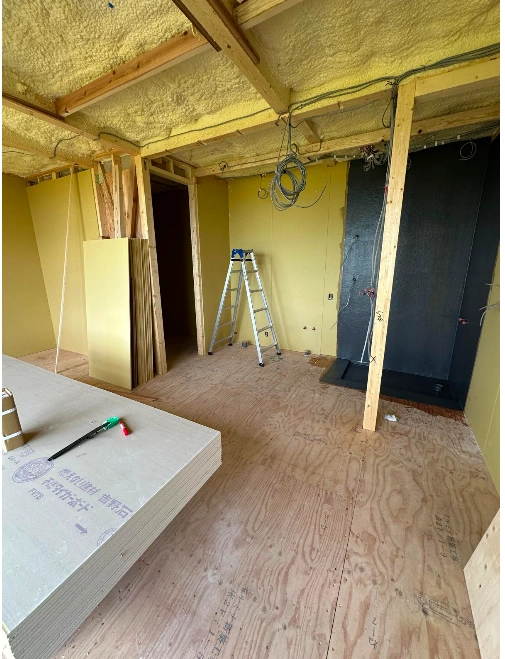
On one project, we fully fiberglassed a second-floor master bathroom shower area in a wooden home, then tiled over the fiberglass reinforced plastic (FRP) substrate. The finished product looks beautiful—you’d never know there’s a waterproof membrane beneath the tile—and it’s been performing perfectly for years. When contractors see tangible examples—especially if they’re local projects they can potentially visit—it changes the conversation from theoretical risk to proven methodology.
Japanese business culture places high value on precedent. “This has been done successfully before” carries significant weight.
4. Understand When to Compromise
Not every battle needs to be fought. Sometimes contractor resistance reveals legitimate site-specific constraints:
- Unusual floor joist configuration
- Limited access for plumbing installation
- Local code interpretations
- Budget realities
I advise clients to distinguish between preferences and requirements. Is this custom bathroom a deal-breaker, or would a high-quality system bath with some modifications (adding a shower fixture, for instance) meet your needs?
Sometimes the best solution is hybrid: standard methods where they work, custom approaches where they truly add value.
5. Build Trust Over Time
My current contractors don’t push back on custom bathroom installations anymore. Why? Because we’ve built a relationship where they trust that:
- I’m not asking them to do anything unsafe or illegal
- I’ll support them with specialists when needed
- I understand their concerns and work collaboratively
- The finished work will protect their reputation
This trust doesn’t happen overnight. If you’re working with a contractor for the first time, expect more resistance to non-standard requests. That’s normal. The key is navigating that first project in a way that builds foundation for future collaboration.
For foreign clients doing a one-time custom build, this means patience, clear communication, and willingness to invest time in the relationship—even if you won’t work with this contractor again.
The project benefits from that investment.
The Real Question: When to Push and When to Walk Away
Here’s what I tell clients facing contractor resistance:
If the contractor is resistant but willing to discuss solutions (bringing in specialists, reviewing examples, adjusting the approach), that’s workable. The resistance may simply be unfamiliarity or risk management, which can be addressed.
If the contractor is categorically refusing and won’t engage with alternatives, you may be dealing with someone who simply doesn’t want to work outside their comfort zone. In that case, you face a choice:
- Compromise on your design preferences
- Find a different contractor
Neither option is wrong. It depends on your priorities. But don’t assume you’re being unreasonable just because a contractor cites safety concerns. Custom bathrooms in wooden homes are done successfully all the time—with proper waterproofing, they’re perfectly safe.
The question is whether your contractor has the skills and willingness to execute them properly.
A Personal Example: The Fiberglass Shower That Changed Everything
The first time we attempted a fully custom second-floor bathroom in a wooden home, our contractor gave us significant pushback. The concerns? Water leakage, seismic risk, building code compliance—the full repertoire.
Rather than argue, I brought in a waterproofing specialist and insisted we proceed with proper methodology. The contractor was skeptical but cooperative.
The result? A beautiful, fully waterproofed custom bathroom with a fiberglass-reinforced substrate beneath ceramic tile that’s been performing flawlessly for years. More importantly, that contractor now does custom bathrooms regularly—because they saw it could be done right.
The initial resistance wasn’t about impossibility. It was about unfamiliarity and risk perception. Once we demonstrated a reliable methodology, it became standard practice.
That’s often how innovation enters conservative systems: one successful example at a time.
What This Means for Foreign Clients Building in Japan
If you’re a foreign client building a custom home in Japan, expect some friction between your expectations and standard Japanese construction practices. This is normal. It doesn’t mean you’re wrong or that your preferences are unreasonable.
But it does mean you need to:
- Understand the cultural communication patterns (indirect objections, face-saving language)
- Look beneath stated concerns to identify the real issues (skill gaps, cost pressure, unfamiliarity)
- Offer collaborative solutions (specialists, examples, adjusted approaches)
- Build trust patiently through respectful engagement
- Know when compromise serves the project and when it undermines your core goals
The second-floor bathroom issue is rarely about bathrooms. It’s about navigating cross-cultural construction practices, managing risk perception, and building trust across different professional frameworks.
Master that navigation, and you’ll get the home you want. Ignore it, and you’ll fight unnecessary battles.
How We Help Foreign Clients Navigate These Challenges
This is exactly why foreign clients building custom homes in Japan benefit from working with someone who understands both the technical requirements and the cultural dynamics.
At Smith & Co., we’ve been managing construction projects for foreign clients in Japan for decades. We know:
- Which contractor concerns are legitimate and which are unfamiliarity
- When to bring in specialists and how to do it diplomatically
- How to communicate with contractors in ways that build cooperation
- What’s actually required by code versus what’s just standard practice
We serve as the bridge between your vision and Japanese construction reality—translating not just language, but expectations, methodologies, and priorities.
Want that custom second-floor bathroom? We’ll make it happen—properly waterproofed, code-compliant, and built to last. We know how because we’ve done it repeatedly.
And we know how to navigate the conversations that make it possible.
Building a custom home in Japan? Need help navigating contractor relationships and technical requirements?
Contact Smith & Co. for construction consulting services tailored to foreign clients.
More Articles
Renovation in Japan covers a wider spectrum than most buyers and investors initially appreciate. It ranges from the careful restoration ...
Author : Mark Smith
Why investor-led buy-and-build-for-rent has narrowed in Japan, land prices up, construction cost increases, yield compression, and what is replacing it. ...
Author : Mark Smith
Six months after handover on a completed project, a prefectural tax bill arrives. The owner was not expecting it. The ...
Author : Mark Smith