
Japan Real Estate Interest Rate Risk: A Mathematical Case Study for Property Investors
A property investor in Hyogo Prefecture recently brought us an interesting dilemma. He owns a cluster of buildings currently valued at ¥750 million based on local agent assessments and recent comparable sales in the area, generating a 12% return on his invested capital with strong fundamentals and healthy occupancy. He’s received an offer of ¥580 million, representing a ¥170 million discount to current market value.
The reason he’s considering it? His financing structure includes ¥248 million in total debt: ¥150 million fixed at 1.5% for the life of the loan, and ¥98 million fixed at 1.7% until 2030, after which it becomes variable. With media coverage intensifying around Bank of Japan rate normalization and inflation concerns, he’s wondering: is it worth accepting a 23% haircut, and walking away from exceptional cash flow, to eliminate the uncertainty of what variable rates might look like when ¥98 million of his debt reprices in 2031?
Understanding the Concerns
The investor’s concerns have legitimate foundations. The Bank of Japan raised its benchmark rate to 0.75% in December 2025, the highest since 1995. Inflation has persisted above the BOJ’s 2% target for 44 consecutive months. Media headlines warn of the end of Japan’s low-rate era.
For our investor, the exposure is concrete: ¥98 million converts to variable rates in 2031. What if rates spike to 3%, 4%, or 5%? The offer on the table, ¥580 million, provides certainty. The cost is ¥170 million, but that’s the price of eliminating uncertainty. Or is it?
The Financial Mathematics
At what variable interest rate does accepting ¥170 million less make financial sense? The current fixed rate on the ¥98 million portion is 1.7%, generating annual interest expense of ¥1.67 million.
If variable rates average 3% over the next decade, the additional annual interest expense is approximately ¥1.27 million. Over 10 years, that’s ¥12.7 million in additional costs, far below the ¥170 million sacrifice today.
Even at 5% average variable rates, which would represent an extraordinary departure from Japan’s fiscal constraints, the additional cost over 10 years would be approximately ¥32 million. The investor would need variable rates averaging over 8% for a decade to justify the ¥170 million discount.
The property generates 12% returns with healthy cash flow. The ¥170 million difference in net proceeds, if reinvested at similar yields, would generate approximately ¥20 million annually, far more than any plausible increase in interest expense on ¥98 million of variable-rate debt.
What Economists Actually Project
The Bank of Japan estimates the ‘neutral rate’, the level that neither stimulates nor restricts growth, lies between 1.0% and 2.5%. Governor Kazuo Ueda stated in December 2025: ‘Regarding the neutral interest rate, unfortunately, it remains a concept that can only be estimated within a fairly wide range at present.’
Despite this uncertainty, economist consensus has coalesced around a realistic terminal rate of 1.0% to 1.75%. Oxford Economics expects 1.0% by mid-2026. EFG International projects 1.25-1.75%. Western Asset expects gradual hikes to ‘at least 1.0%’ with the pace slowing as economic impact intensifies. Most forecasters expect 2-4 additional rate hikes over the next two years, then stabilization.
This means the variable rate beginning in 2031 would likely price off this range. Our investor’s current fixed rate of 1.7% is actually higher than the expected BOJ policy rate and near the upper end of the projected terminal range.
Japan's Fiscal Mathematics
Japan’s fiscal position creates a hard ceiling on how high rates can rise. Japan carries approximately 260% debt-to-GDP, among the world’s highest. The United States carries roughly 100%, the UK 115%, France 101%.
This creates severe interest rate sensitivity. In the United States, each 1% increase in rates adds approximately 1% of GDP to debt servicing costs. In Japan, each 1% increase adds approximately 2.5% of GDP, two and a half times the fiscal impact.
The International Monetary Fund projects that Japan’s debt servicing costs will double by 2030, rising to approximately 9% of GDP. This projection assumes the gradual rate increases currently underway, not aggressive tightening.
Japan must issue over ¥172 trillion in government bonds annually. Of this amount, approximately ¥140 trillion simply rolls over maturing debt, roughly equivalent to two full years of tax revenue. More than half of outstanding bonds mature within five years, creating high sensitivity to rate changes.
Historical precedent matters. Japan attempted rate normalization in 2000 and again in 2006. Both ended in reversal when economic and fiscal realities intervened. The 2000 attempt ended with rates back at zero within a year. These weren’t policy failures, they were collisions with fiscal reality.

The Wage-Inflation Wildcard: Could Strong Growth Force Higher Rates?
One scenario worth examining: what if wage growth and inflation succeed in eroding Japan’s debt-to-GDP ratio, creating fiscal space for the BOJ to raise rates more aggressively than currently projected?
The Theory: If Japan achieves sustained wage growth of 3-4% and inflation runs at similar levels, nominal GDP growth could outpace debt accumulation. This would gradually reduce the debt-to-GDP ratio through denominator growth, giving the government breathing room and potentially allowing the BOJ to normalize rates more substantially without triggering fiscal crisis.
This is actually what some economists believe is the BOJ’s implicit strategy: engineer just enough inflation and wage growth to inflate away debt while keeping real rates negative.
The Historical Reality Check: Japan has attempted this exact strategy twice in recent decades, and both times, it failed for the same reason.
Under Prime Minister Koizumi in the early 2000s, aggressive fiscal and monetary stimulus was deployed specifically to drive inflation and corporate spending. Under Prime Minister Shinzo Abe from 2013-2021, massive quantitative easing and fiscal expansion (Abenomics) aimed to achieve the same goals: wage growth, inflation, corporate investment.
In both cases, Japanese corporations responded identically: they kept their hands in their pockets. Despite stimulus, accommodative policy, and government pressure, companies prioritized balance sheet strength over wage increases and capital expenditures. They hoarded cash rather than spending it into the economy.
There’s nothing to suggest corporate behavior will differ this time. Japanese companies have demonstrated a consistent, culturally reinforced preference for financial conservatism. Two major policy experiments failed to change this behavior. Why would a third attempt succeed?
What This Means for the Investor: Even the theoretical scenario where strong wage-inflation growth creates room for higher rates appears historically unlikely. If corporations don’t pass stimulus through as wage increases, and history says they won’t, the BOJ remains fiscally constrained to the 1.0-1.75% terminal rate range that economists currently project.
The Decision Framework
Rather than prescribing a decision, consider this analytical framework:
The actual exposure: Only ¥98 million of ¥248 million total debt faces variable rate risk starting in 2031. The bulk (¥150 million) remains fixed for life at 1.5%. The loan-to-value ratio of 33% provides substantial equity cushion. This is limited, manageable exposure, not existential risk.
Refinancing optionality: The investor doesn’t face a binary choice. In 2029 or 2030, he can evaluate the actual rate environment and refinance the ¥98 million into fixed-rate debt if rates appear concerning, or sell at potentially higher values given ongoing appreciation. This optionality disappears if sold now.
The fiscal ceiling: Japan’s 260% debt-to-GDP ratio isn’t theoretical, it’s a mathematical constraint limiting how high rates can rise. Each 1% increase costs 2.5% of GDP in additional debt service. Historical corporate behavior makes the inflation escape valve unlikely.
Asset appreciation: Selling at ¥580 million eliminates participation in future appreciation. If the appreciation trend continues through 2030, the property might be worth ¥850-900 million when refinancing decisions need to be made. Holding preserves both exceptional cash flow and upside potential.
Conclusion
The analytical framework suggests the ¥170 million discount substantially overprices the actual risk. Key considerations include:
• Economist consensus projects terminal rates of 1.0-1.75%, close to or below the current 1.7% fixed rate • Even 5% average variable rates over a decade don’t justify the ¥170 million sacrifice • Japan’s fiscal mathematics create a hard ceiling on sustainable rates given 260% debt-to-GDP • Historical corporate behavior makes wage-driven inflation unlikely to materialize • Refinancing optionality exists through 2030 before any variable period begins • Only ¥98 million of ¥248 million faces variable exposure; the rest is fixed for life
This analysis focuses on interest rate mathematics and fiscal constraints, but necessarily simplifies a complex decision. It doesn’t fully account for currency risk, potential credit market disruptions, the possibility of forced sale scenarios, unforeseen capital expenditures, changes in property market dynamics, political shifts, or the dozens of other variables that could affect outcomes. A truly comprehensive analysis would be never-ending, there’s always another ‘what if’ to consider.
What this framework does provide is a mathematical baseline: the ¥170 million discount represents the price of certainty. Whether that price is justified depends on factors beyond pure mathematics, personal circumstances, risk tolerance, liquidity needs, and subjective assessment of Japan’s economic trajectory.
Disclaimer:
This article is provided for informational and educational purposes only and does not constitute financial, investment, legal, or tax advice. The analysis presented reflects observations based on publicly available economic data and forecasts, which are subject to change and may prove inaccurate. Real estate investment decisions involve substantial risk and depend on individual circumstances, risk tolerance, financial position, and objectives that cannot be assessed in a general article. Readers should conduct their own due diligence and consult with qualified financial, legal, and tax professionals before making any investment decisions. Past performance and historical patterns do not guarantee future results. The author assumes no responsibility for any actions taken based on information contained in this article.
More Articles
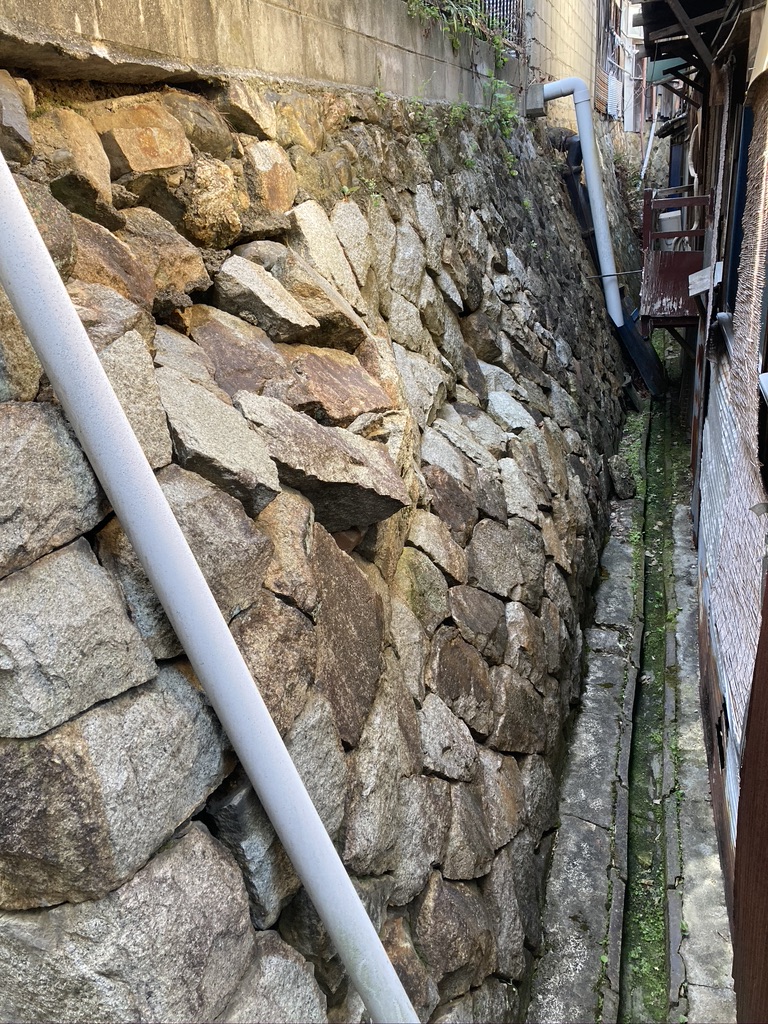
Most Japan real estate developers confronting this assessment would immediately withdraw. Moreover the technical complexity, liability exposure, and cost uncertainty ...
Author : Mark Smith

When the world’s largest pension fund makes a strategic move, it is worth pausing to understand why. The Government Pension ...
Author : Mark Smith

Across the internet today, you’ll see the words Kominka, Minka, and Akiya used everywhere — from travel blogs and YouTube ...
Author : Mark Smith
Why investor-led buy-and-build-for-rent has narrowed in Japan, land prices up, construction cost increases, yield compression, and what is replacing it. ...
Author : Mark Smith
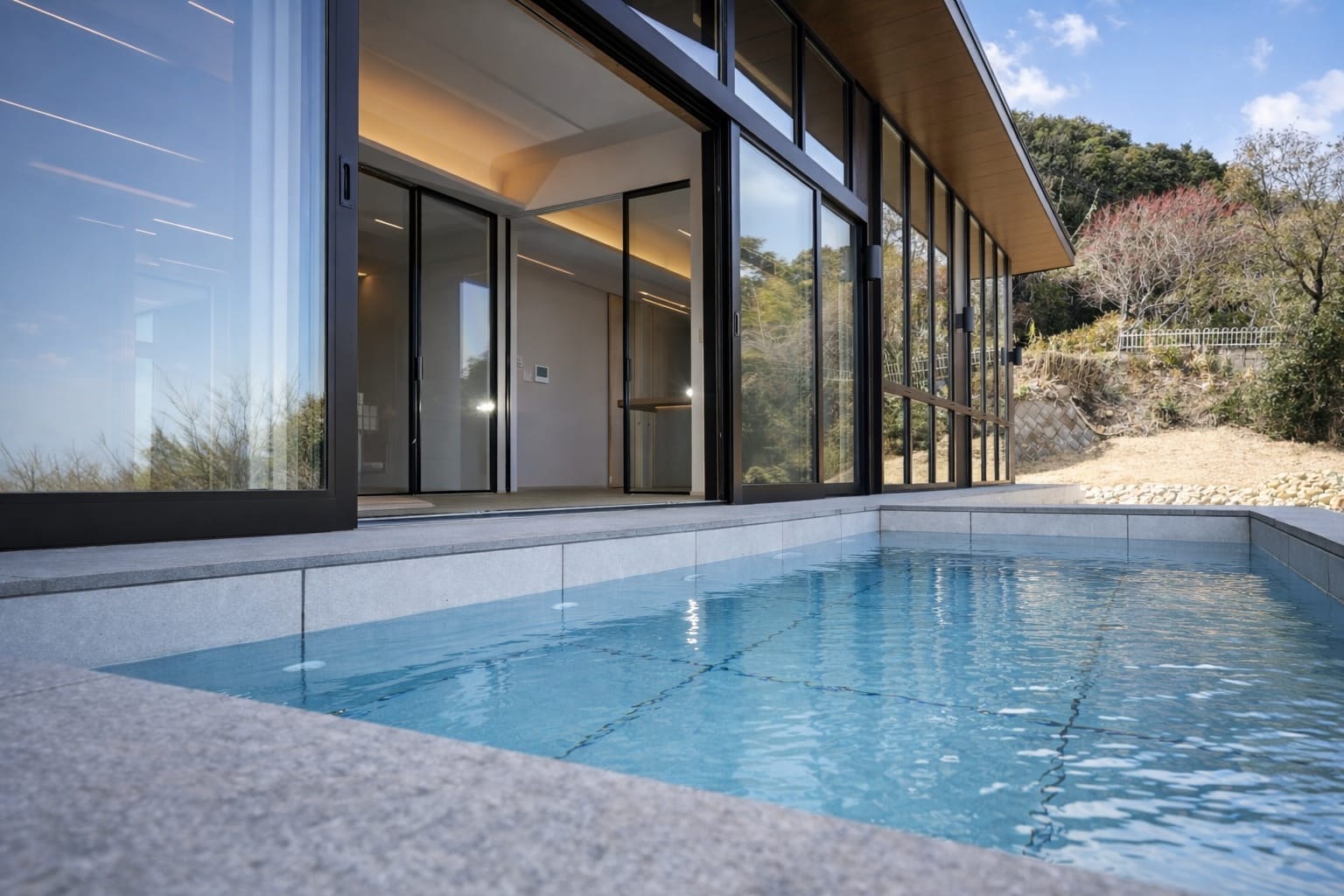
As Japan real estate consultants focused on Awaji Island’s west coast, we are increasingly being asked the same question: where ...
Author : Mark Smith
Debate: Rising material costs and labor shortages have sparked discussion on whether investing in Japanese real estate is a smart ...
Author : Mark Smith