
Japanese Bank Lending for Real Estate Investors: What to Expect and How to Build Standing
The first investment loan I secured in Japan required a 50% cash deposit. The interest rate was roughly triple what an established Japanese investor would have paid on the same asset. The bank was not being unreasonable. It had no basis on which to assess me as a real estate investor in Japan — because I had no history as one. The track record I had built elsewhere counted for nothing in that credit meeting. I was starting from zero.
That experience taught me something about Japanese bank lending that is more useful than any general guide to the subject: the barrier is not primarily nationality, language, or even the structure of the loan. The barrier is the absence of a Japanese operating history. And the only way through it is to build one.
Full Recourse — The Starting Point
Japanese real estate loans are almost universally full recourse. Non-recourse lending — where the bank’s claim in a default is limited to the asset itself — is rare. What this means in practice is that the borrower’s personal liability extends beyond the property. Default consequences are not contained. This is not a warning to avoid Japanese lending. It is context for understanding why Japanese banks are deliberate, conservative, and relationship-driven in a way that lenders in other markets often are not.
A full recourse lender needs to believe in the borrower, not just the asset. That belief is built over time, through a track record of occupied buildings, debt serviced on time, and projections that prove accurate. There is no shortcut.
Why Good Numbers From Elsewhere Are Not Enough
This is the part that surprises foreign investors who arrive in Japan with strong portfolios behind them.
We have seen buyers come in with significant cash, acquire multiple income-producing properties, and attempt to use those assets as collateral for further lending. The properties are real. The income is real. The collateral is demonstrable. The answer from Japanese banks is still no.
There are two reasons, and both matter. The first is operating history. A Japanese bank will typically want to see three or more years of those assets in operation before it will consider them as a foundation for further lending. A portfolio assembled quickly — even with cash, even with attractive yields — has no running history to show. The bank cannot assess what it cannot see. Assets bought in a short span, all performing well on paper, are not the same as assets that have demonstrated three or more years of occupancy, income, and management in the Japanese market.
The second reason is the operator question. The bank is not assessing the asset in isolation. It is assessing the person running it. Has this investor managed rental property in Japan? Do they understand the local tenant market, the management obligations, the regulatory environment? Do they have a track record — here, in this country, in this lending environment — that the bank can review? Without that, the collateral is not enough. A strong portfolio in another country does not transfer. An occupancy record from Sydney or Singapore or London means nothing to a credit committee in Osaka. The bank’s risk is not the building — it is whether the person running the building knows what they are doing in Japan. And that can only be demonstrated by having done it in Japan, over time.
The Nationality Question
There is bias in Japanese bank lending toward foreign nationals. It is sometimes stated explicitly in credit meetings — nationality as a declared risk factor. This is not something to pretend does not exist.
But it is also not the primary barrier, and dwelling on it is not productive. What overcomes bias in a Japanese bank is the same thing that overcomes it everywhere: numbers that speak for themselves. Accurate projections. Occupancy that holds. Debt serviced on time. A building managed professionally and generating what it was meant to generate.
The deeper barrier — and the one that applies equally to Japanese nationals with no real estate investment history — is simply the absence of a local track record. A Japanese salaryman with no investment history faces the same conservative initial terms that a foreign national does. The bank’s caution is about the operator’s demonstrated competence in this specific market, not their passport. Nationality is a surface concern. Operating history is the real one.
How the Relationship Actually Builds
My first investment loan — a small block of six one-bedroom units — required that 50% deposit and carried a rate that reflected the bank’s genuine uncertainty about who it was lending to. That was the starting point. It was uncomfortable. It was also correct.
What changed it was performance. Not immediately, and not dramatically — but steadily, over years of occupied buildings, consistent income, and projections that proved accurate rather than optimistic. Each loan that performed well became the evidence base for the next conversation. Each building that hit its occupancy targets over multiple years became a data point the bank could point to internally when approving the next application.
One thing worth understanding about Japanese banks: loan officers are rotated regularly, deliberately, to prevent the formation of personal relationships that might cloud credit decisions. The relationship is not with an individual — it is with an institution that maintains a documented record of your performance. That record survives every staff rotation. The bank remembers because the numbers are in the file, not in anyone’s memory. This is why accuracy matters more than rapport. The officer sitting across from you today may not be there in two years. The projection you submitted and the occupancy you delivered will still be on record.
Today, with a portfolio of residential apartment buildings operating at consistently high occupancy across decades, the dynamic has reversed. Banks come to us. Sometimes literally — a relationship manager arrives, sits down, and asks whether we want to borrow more. The answer is no, because we are where we chose to be. But the offer is available, and the terms bear no resemblance to that first loan.
That progression — from 50% deposit and triple the market rate to banks seeking us out — did not happen because of nationality, language ability, or any particular negotiating skill. It happened because the buildings performed and the numbers were honest.
Building a Custom Home in Japan — design, coordination, and build execution.
Subscribe to receive new articles from Smith Realty Japan.
What Accuracy in Projections Actually Means
A projection submitted at loan application is not forgotten once the money is drawn. It becomes the benchmark against which the bank measures subsequent performance. An investor who consistently projects 95% occupancy and delivers 95% occupancy builds a credibility that compounds. An investor who projects optimistically and delivers modestly erodes it — and that erosion is recorded, regardless of who the loan officer is at the time of review.
What we tell clients who are beginning this journey is straightforward: your first projection should be one you are certain you can beat. Your first loan should perform better than the numbers that secured it. The bank will notice. That noticing is the foundation of everything that follows.
One Practical Advantage Worth Knowing
For a foreign investor approaching a Japanese bank for the first time, there is one practical step that makes a genuine difference: attending the credit meeting alongside a veteran real estate investor who has an established standing with that bank, who has helped structure the application, and who is willing to support your project.
The bank sees a known quantity alongside an unknown one. The veteran’s track record does not transfer to the applicant’s loan — but their presence signals that someone with credibility has reviewed the application, the numbers, and the project, and considers it sound. In a lending environment where the absence of local history is the primary obstacle, that signal carries real weight. It does not replace the need to build your own history. But it can make the first step more accessible than it would otherwise be.
What This Means for a Foreign Investor Starting Out
The pathway exists. It is slower and more conservative than most foreign investors expect, and it requires a genuine commitment to building a Japanese operating history rather than importing a track record from elsewhere.
The starting conditions will be tighter than for an established local investor. The deposit requirement will be higher. The rate will reflect the bank’s uncertainty about an unproven operator. The appropriate response is not to argue against it but to perform through it.
Investment property lending to foreign nationals in Japan is genuinely difficult. The number of banks willing to lend on income-producing property to a non-Japanese borrower is small, and the conditions — deposit requirements, operating history bar, and guarantor obligations — are demanding.
On the guarantor question: Japanese real estate loans typically require a rentai hoshonin (連帯保証人) — a joint guarantor who shares full liability for the debt. This is not a co-signature on a rental application. If the borrower defaults, the bank will pursue the guarantor with the same force it pursues the borrower — assets, income, and personal financial position. The exposure is real and can follow a guarantor for years. For a foreign national seeking an investment property loan, finding a creditworthy Japanese guarantor willing to accept that obligation is itself a significant step — and one that should be understood and arranged before approaching a lender, not after.
This is not a reason to avoid the journey, but it is a reason to understand the landscape honestly and prepare accordingly. For an investor starting the journey today, the first loan is still the hardest. What matters is that the building performs — because that performance is the foundation everything else is built on.
The relationship with a Japanese bank, built correctly over time, becomes a genuine asset. Not because the bank becomes generous, but because it becomes confident. A confident Japanese lender is a different conversation entirely from a cautious one — and the distance between those two positions is measured in years of accurate projections and occupied buildings.
There is no shortcut. But the destination is real, and the journey is straightforward if the discipline holds.
Our Insights reflect how we think about investing in Japanese real estate — the questions we ask, the trends we watch, and the reasoning behind the decisions we make for our own portfolio. We share them in the hope they’re useful food for thought, but they are not advice — just one active investor’s view of the market.
More Articles
Forward-thinking investors team up with Smith Realty Japan: Premier Consulting Services for Your Real Estate Projects Discerning Clients Demand our ...
Author : Mark Smith

Field notes on the Tsuruoka Miyazawa property, an active 2026 consulting case. A client asked me to review a rural ...
Author : Mark Smith
A Hyogo Prefecture case study exploring whether interest rate uncertainty justifies selling income-producing Japanese real estate at a significant discount. ...
Author : Mark Smith
At Smith Realty, our journey has been shaped by recognizing and responding to unique opportunities. Seeking disparity in purchase and ...
Author : Mark Smith
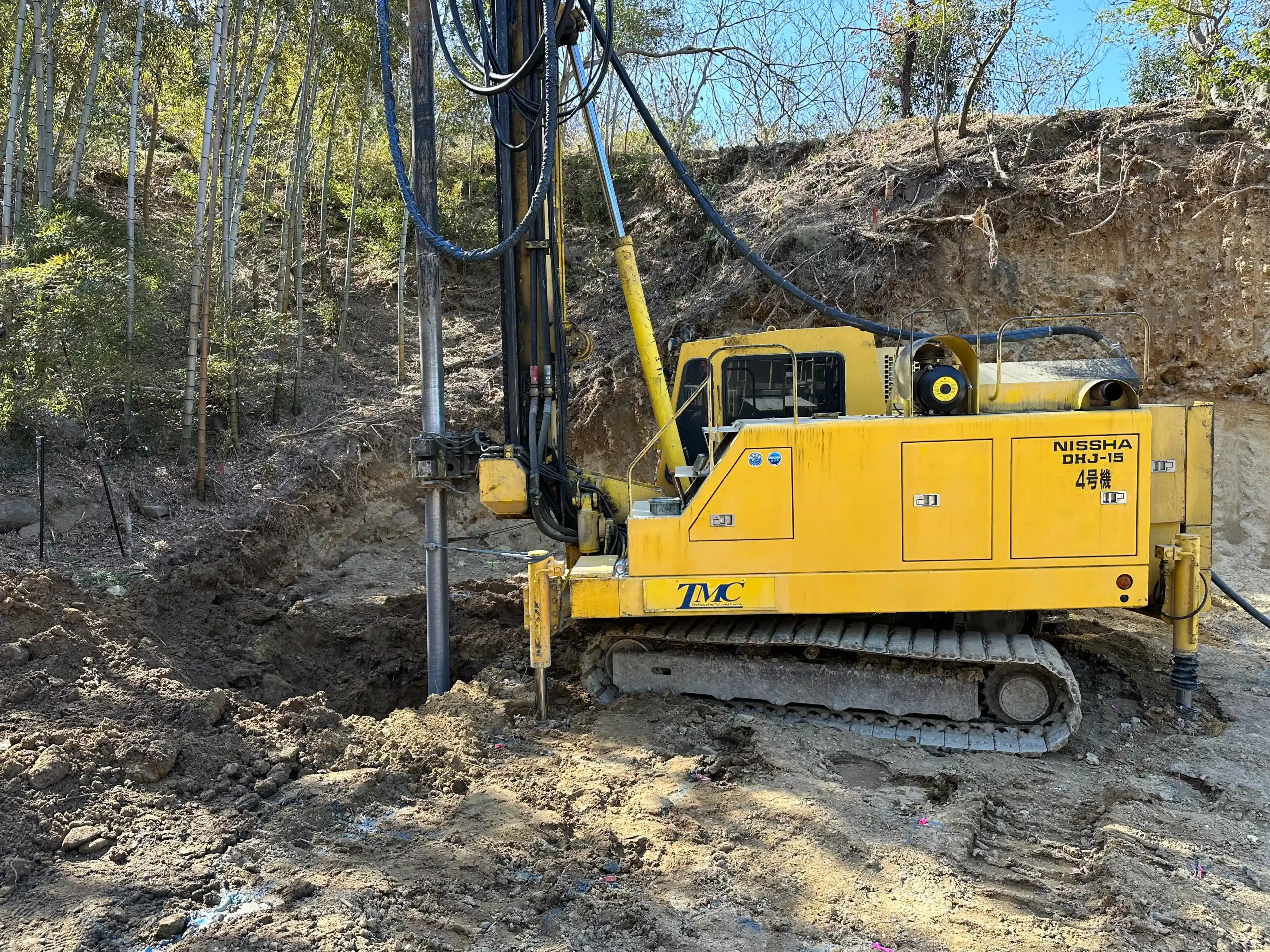
A geotechnical investigation , borehole testing or standard penetration testing , tells you what is beneath the surface before you ...
Author : Mark Smith
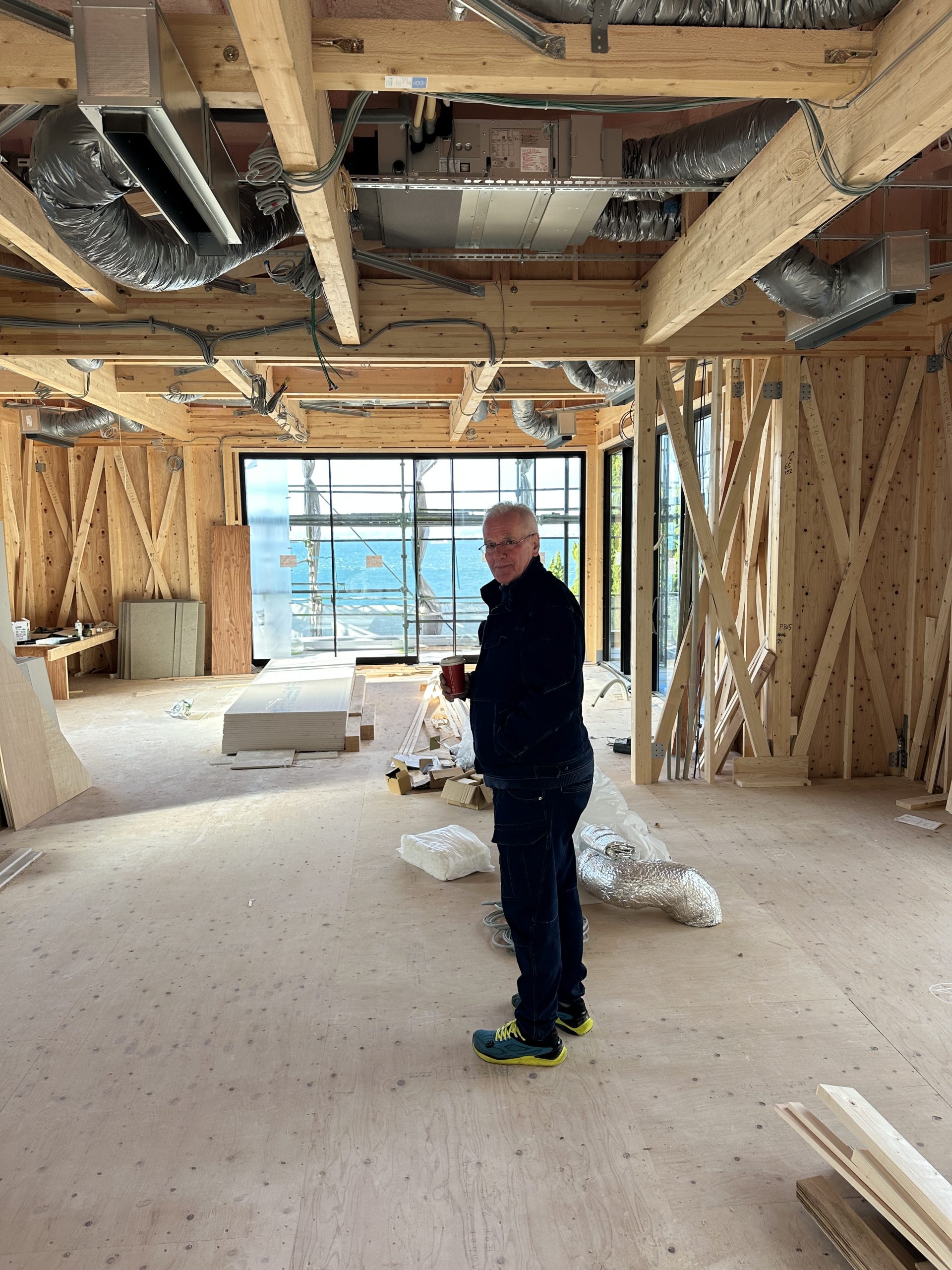
Debate: Rising material costs and labor shortages have sparked discussion on whether investing in Japanese real estate is a smart ...
Author : Mark Smith