
Earning Appreciation in Stagnant Japanese Market: The Disparity Arbitrage
In Japan’s post-1989 real estate environment, standard appreciation strategies have produced minimal results for most investors. Broad-based capital growth — the kind that rewards participation over selection — has been largely absent from suburban markets for more than three decades. In that environment, a different approach becomes not just viable but necessary: identifying artificial disparities, understanding what sustains them, and positioning before the catalyst that closes them. This article sets out the framework we use. It is drawn from direct experience in the Kansai market across multiple acquisition cycles and reflects how we continue to evaluate opportunities.
Japan’s Stagnant Real Estate Market: The Context
Japan’s real estate markets have operated in a fundamentally different paradigm since the 1989 bubble collapse. While other developed markets experienced cycles of growth, property values in most suburban locations remained largely flat for over three decades. Areas priced at a certain level two decades ago remain at essentially the same level now — zero nominal appreciation across nearly a quarter century in many markets.
This stagnation has persisted through multiple economic cycles, stimulus programmes, and policy interventions. The 2008 financial crisis, Abenomics-era stimulus, and inflationary periods all passed without moving the needle on standard suburban residential values in most markets. Certain high-profile districts — central Tokyo, areas benefiting from specific infrastructure investment — experienced appreciation, but these are the exception rather than the rule.
In rising markets, selection matters less than participation. In stagnant markets, selection becomes everything. The challenge is identifying the rare pockets where transformation can generate isolated appreciation while surrounding areas remain flat.
Finding Value Disparity: The Gap That Matters
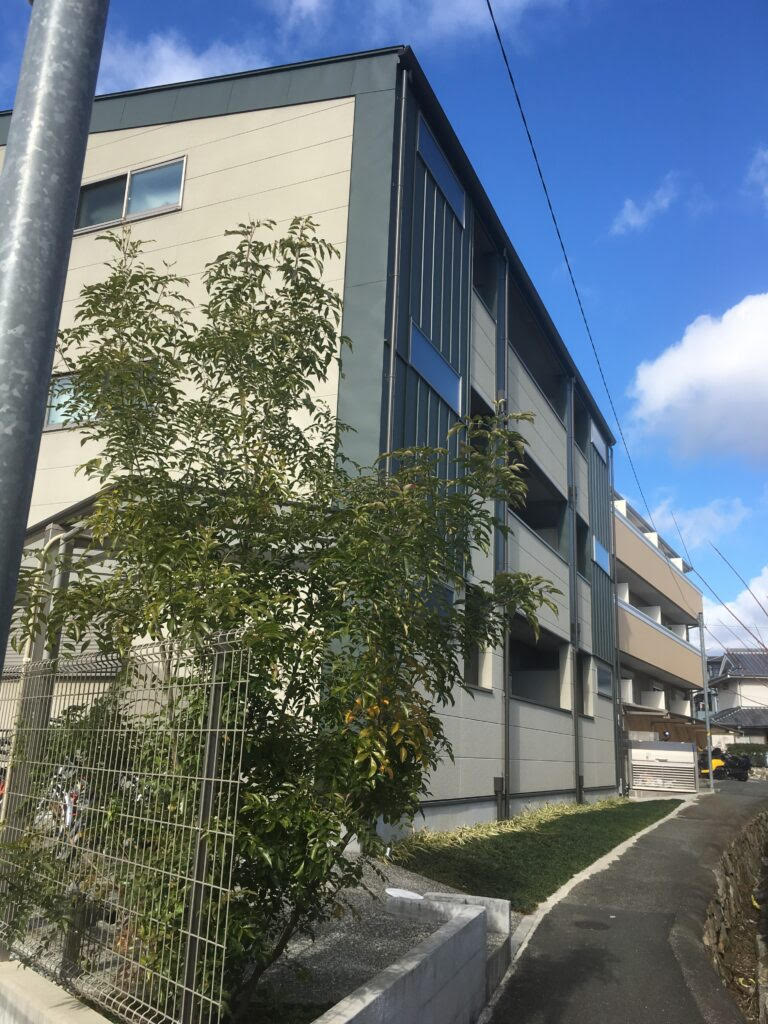
The disparity arbitrage framework begins with a simple observation: in any given market, artificial price gaps exist between adjacent areas that share fundamentals — the same distance to transit, the same municipal services, the same demographic catchment — but are priced very differently because of perception rather than reality.
These gaps are not subtle. In our experience, land separated by one street can trade at a fraction of its neighbour’s value — not because the location is genuinely inferior, but because a barrier exists that the local market has decided to price in permanently. That barrier might be industrial contamination, cultural association, a historical land use that no longer operates, or simply a reputation that predates anyone currently active in the market.
What makes these disparities compelling is their persistence. Unlike most market inefficiencies, which resolve quickly once identified, perception-based discounts can endure for years or decades. The local market doesn’t ‘discover’ the opportunity — it actively avoids it, because the barriers are genuine and the resolution requires a catalyst beyond private capital’s reach. That is both the risk and the return. The disparity is real. The question is always whether a sufficient catalyst will emerge to close it.
Municipal Transformation as Investment Catalyst
The catalysts we look for are structural and public. Private investment can improve a building; it cannot transform a neighbourhood’s identity. What can is committed municipal intervention at a scale that signals permanent change rather than superficial remediation.
The distinction matters. Incremental municipal spending — basic cleanup, minor infrastructure — leaves fundamental perception intact. It is only when a city commits resources at a scale that makes reversal economically unthinkable that perception begins to follow. The signal is not the remediation itself but the commitment embedded in the scale of it.
Infrastructure upgrades are equally important. Road widening that enables higher-density development, underground utility installation that transforms streetscape aesthetics, anchor facility construction that changes who comes to an area and why — these are not cosmetic. They unlock development capacity and signal to the market that the area’s identity has changed, not just its condition.
The investor who positions before these catalysts are complete — when the commitment is visible but the perception has not yet caught up — captures the full arbitrage. The investor who arrives after convergence is underway pays the updated price for a fraction of the return.
Demographic Targeting: Working Around Perception
Municipal transformation removes the physical or structural cause of a discount. It does not automatically eliminate the cultural perception that has accumulated around it. In Japan particularly, local buyers carry historical associations that may persist long after the underlying conditions have changed.
The solution is not to argue with that perception. It is to target demographics that do not hold it. Young professionals relocating for work, medical staff on rotating assignments, recent graduates entering the rental market for the first time — these residents evaluate a property on its current condition, amenities, and value. They have no historical relationship with the area and no inherited view of what it represents. For them, a well-built, well-maintained building in a convenient location at a competitive price is simply a good option.
Product differentiation reinforces this. Where competing rental stock offers minimal space at standard rates, offering materially more space at the same price point creates a self-evident value proposition that requires no explanation. Residents do not ask why the price is reasonable — they conclude they have found something worth staying in. Average tenancies lengthen. Occupancy stabilises. The building performs.
Operational excellence seals it. Immaculate common areas, well-maintained gardens, responsive management: these are not luxury features. They are the conditions under which tenants stay and refer others. A building that looks after its residents does not need to compete on price.
Isolated Appreciation in Flat Markets: How the Return Works
The return profile of disparity arbitrage differs from standard capital growth investment in one critical respect: appreciation is isolated, not distributed. In a rising market, the whole portfolio benefits from the tide. In a stagnant market, appreciation in a transformed area does not spread to adjacent areas — it remains specific to the zone where the catalyst operated. The neighbouring area, one street removed, stays flat.
This comparison is the proof of concept: returns came entirely from disparity closure, with no contribution from market-wide growth.
This also means the framework cannot be replicated simply by buying in the same area after transformation is complete. The return was earned by those who identified the disparity, assessed the catalyst, and held through the transformation period. Later entrants pay the post-convergence price.
What the framework does offer is transferability. The same three-part logic — artificial disparity, structural catalyst, demographic workaround — applies wherever these conditions can be found. It is not geography-specific. It is pattern recognition applied to market inefficiency.
Applying Disparity Arbitrage to Current Opportunities
The same framework applies wherever artificial barriers depress values below intrinsic location worth — including one emerging category worth examining closely.
Japan faces a structural shift in agricultural land as rural populations age and farming succession becomes increasingly difficult. Projections suggest abandonment could reach significant levels across accessible suburban and peri-urban zones in coming decades, with certain regions anticipating that the majority of agricultural parcels may be left without cultivators. This creates a structural disparity: farmland trades at a fraction of suburban residential land one kilometre away.
The catalyst appears to be forming. Municipal governments cannot ignore mass farmland abandonment in accessible locations — it creates economic drag, visual deterioration, and lost tax revenue. Government agricultural policy has been shifting toward conversion programmes, infrastructure support for redevelopment zones, and eased restrictions on agricultural-to-residential transformation.
The demographic component follows the same logic. Japanese buyers carry cultural associations with agricultural land that may limit adoption. Foreign buyers — particularly those seeking space, nature access, and proximity to major cities — evaluate farmland conversion opportunities through entirely different frameworks. Space that reads as ‘agricultural land’ to local buyers reads as ‘countryside estate with city access’ to an international buyer.
The three-part framework remains consistent: identify artificial disparity, confirm sufficient catalyst, mitigate perception barriers through demographic targeting. Execute all three and disparity closure becomes probable rather than speculative.
In select cases we have directly converted former agricultural parcels into buildable residential land — though this is not universally replicable. Success depends on specific municipal zoning policies, infrastructure availability, and conversion eligibility. Thorough research and local regulatory expertise are essential before pursuing agricultural conversion strategies.
Patient Capital in Inefficient Markets
Stagnant markets reveal what rising markets obscure: the difference between strategic selection and market beta. When all properties appreciate, selection quality matters little. When nothing appreciates, selection becomes everything.
The disparity arbitrage framework requires patience incompatible with short-term capital. The disparity endures because others either do not see it, do not believe the catalyst will materialise, or lack the conviction to hold through a transformation that may take years to complete. That is not a flaw in the approach — it is the source of the return.
For investors seeking opportunities in Japan’s real estate market, the lesson is direct: broad appreciation in standard suburban markets remains unlikely without structural economic changes that have eluded Japan for decades. Structural disparities, by contrast, exist wherever artificial barriers — contamination, cultural perception, regulatory constraint — depress values below intrinsic location worth.
Identifying these disparities, confirming transformation catalysts, and structuring investments to capture convergence remains a viable strategy. It requires local knowledge, patient capital, and operational discipline. In a market where standard approaches produce minimal returns, disparity arbitrage is not an alternative strategy. It is the primary one worth pursuing.
Our Insights reflect how we think about investing in Japanese real estate — the questions we ask, the trends we watch, and the reasoning behind the decisions we make for our own portfolio. We share them in the hope they are useful food for thought, but they are not advice — just one active investor’s view of the market.
More Articles
Author : Mark Smith

Finding the right parcel is not just about location; it's about potential. It's about aligning the land's unique characteristics with ...
Author : Mark Smith

Author : Mark Smith

Field notes on the Tsuruoka Miyazawa property — an active 2026 consulting case. A client asked me to review a ...
Author : Mark Smith
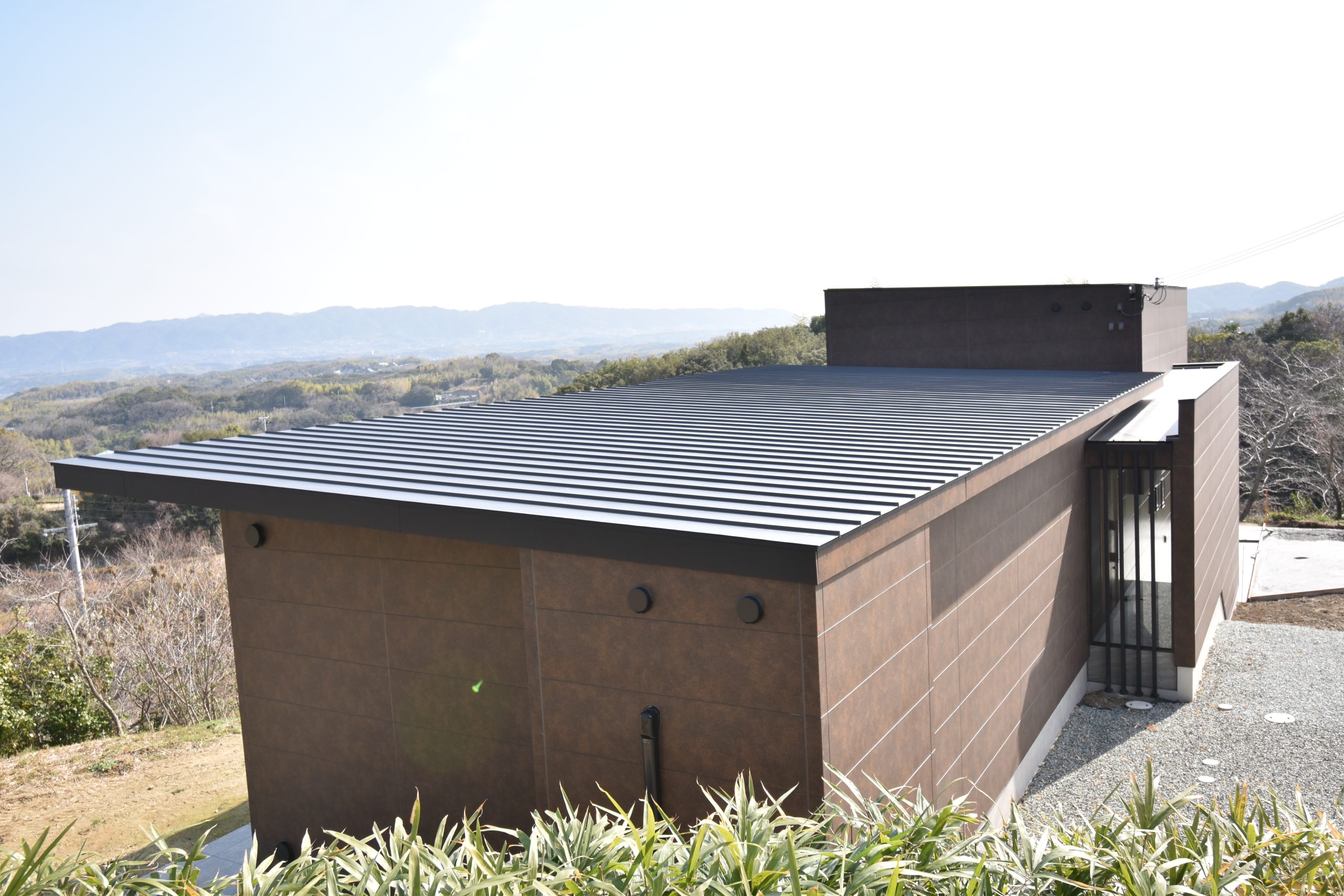
Many architect-designed homes in Japan are eliminating visible rain gutters to achieve cleaner architectural forms. Learn how modern custom homes ...
Author : Mark Smith