
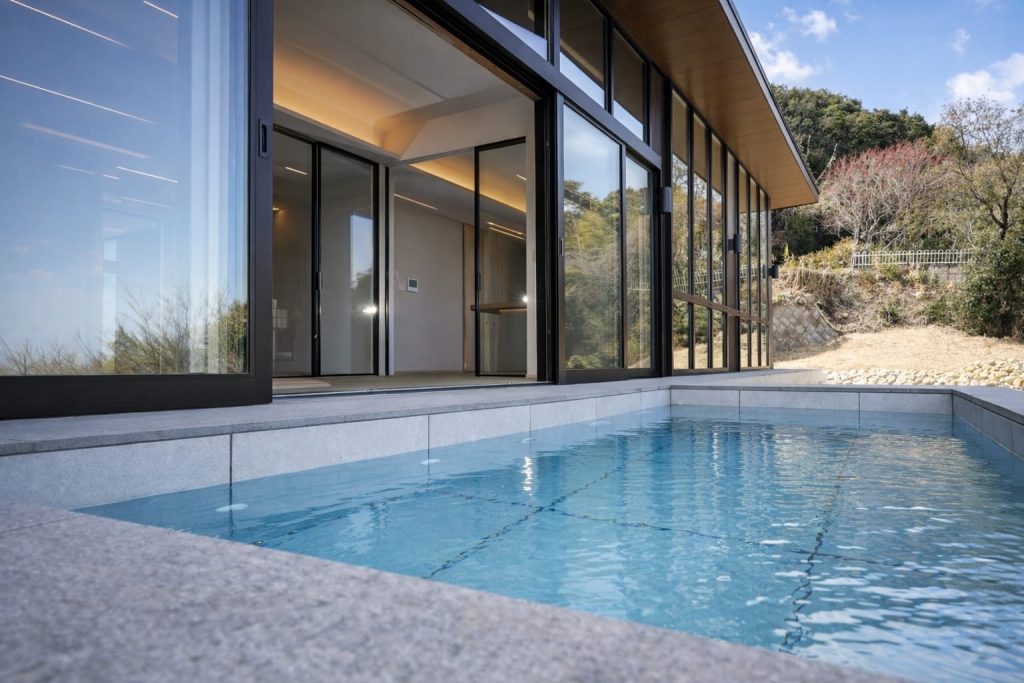
Where is the north-west coast of Awaji Island heading? We have been asked that question often enough that it warrants a direct answer. What follows is drawn from direct experience: finding land, negotiating acquisitions, delivering projects on this coastline. It is also informed by observations we have made watching comparable situations develop in other markets over a considerable period of time.
What those observations point to is a coastline in the early stages of a repricing that is visible in the transaction record, grounded in verifiable change, and recognisable to anyone who has watched how this kind of shift unfolds in other markets. This article sets out what we are seeing, why we think it is likely to continue, and what experience from elsewhere suggests about how these situations develop over time.
Awaji Island sits in the Seto Inland Sea between Honshu and Shikoku, connected to Kobe by the Akashi Kaikyo Bridge. The drive from Sannomiya, central Kobe, to the northern tip of the island takes approximately forty minutes. Osaka is within practical reach. The island is not remote by any measurable standard, but it has carried a remote perception for long enough that pricing in parts of the land market still reflects it.
That perception is being eroded by verifiable change. The relocation of Pasona Group, a Tokyo-listed employment services company, from central Tokyo to Awaji City brought approximately 1,200 permanent employees to the island and signalled a long-term economic commitment that has not reversed. Additional corporate activity has followed. The island now has an employment and commercial base that was not present a decade ago, and land prices across its three municipalities have begun to respond. The institutional case for Japanese real estate has shifted in parallel, a subject we have explored in the context of the GPIF’s evolving real estate strategy.
The response has been uneven. That unevenness is the investment argument.
The concentration of value has been most visible along the north-west coastline. This stretch offers open-ocean orientation, low-density development, and a coastal lifestyle quality not found on the Kansai mainland at any comparable price point. The supply of land with these characteristics, genuine coastal frontage or outlook, within a practical distance of a major urban corridor, is structurally limited. That scarcity is a physical fact, not a marketing position.
What is now observable in the transaction record is a clear separation between two pricing realities. In parts of the north-west coast, land continues to trade at levels shaped by legacy perception, the residual discount of a market that evaluates Awaji by its recent past rather than its current trajectory. At the same time, completed residential assets along the same coastline are being priced at levels that reflect an entirely different reality: international specifications, coastal scarcity, and a buyer base that extends well beyond Japan.
We have been directly involved in two projects that sit at either end of that spectrum. Vista Wellmina Villa, an architect-designed residence above terraced rice fields with direct views across the Seto Inland Sea, is listed at ¥187 million and represents the third residence we have delivered for the same international investor on this coastline. A second project at Nojima Ezaki, the north tip of the island, is a reinforced concrete and timber residence of 499 square metres on a 1,278 square metre lot, newly completed in March 2025 and listed through international channels at the equivalent of over ten million US dollars.
Both projects followed the same process: we identified the land, negotiated the acquisition price, introduced the architect, introduced the builder, supervised the quoting phase, participated in every design meeting, maintained daily site presence through construction, and stood with the owner at handover to negotiate remedial requirements on errors and minor damage. The Nojima Ezaki project carried additional complexity, a mixed residential and protected forest land classification with no designated zoning district, requiring careful regulatory navigation from the outset.
These are not data points observed from a distance. They are projects we built. And they mark where the ceiling of this market is now being set by capital that has arrived on this coastline, with a reference frame the domestic market does not yet share.
The gap between where land is still trading and where completed assets are now being positioned is real and currently material in specific locations. Understanding why it exists and why it is likely to close requires looking at how comparable situations have unfolded elsewhere.
In the 1990s, a parcel of land in Kawanishi, Hyogo Prefecture, was trading at approximately ¥100,000 per tsubo. One street away, standard residential land was changing hands at ¥550,000 per tsubo or more. The gap had been stable for years. Local buyers accepted it as the natural order and moved on.
The reason for the discount was real, but its nature matters. The site had a history of industrial use associated with a local leather processing operation, a trade that carries specific cultural associations in Japan, which have nothing to do with contamination in any technical sense, but which are deeply embedded in how such land is perceived and therefore priced. The stigma was historical and social, not physical.
Strip away the association, and what remained was a flat, accessible site a ten-minute walk from a major rail interchange, exactly the kind of location that commands premium residential pricing anywhere in the Kansai market. Access, density potential, transport proximity: the fundamentals were intact. Only the reputation was compromised.
Acquisition was made on that basis. The underlying condition had already been formally defined, and a municipal remediation programme was underway. This was not speculation on an unknown outcome. It was an informed position in a mispriced asset where the cause of the mispricing was bounded, understood, and in the process of being resolved, held by a market that had not yet registered the change.
After remediation, the repricing did not happen overnight. Perception moves slowly in Japan, and local transactions continued to reflect old assumptions for a period after the physical work was complete. By 2024, comparable land in the same precinct was transacting at between ¥700,000 and ¥1,200,000 per tsubo. The neighbouring street, which had never carried a discount, did not move to the same degree. The arbitrage was specific to the land that had been mispriced, and the return reflected that specificity.
The mechanism is worth naming precisely: a market applying a discount for a condition that has already been addressed, sustained by perception lag rather than by any remaining fundamental risk. The window between the resolution of the underlying condition and the market’s recognition of that resolution is where the return sits.
Niseko, in Hokkaido, had been a functioning Japanese ski resort for decades before international capital arrived in volume. Japanese skiers knew it well. It was a perfectly respectable domestic winter destination, priced both accordingly and modestly, by the standards that apply to regional Japanese resort land. The domestic market was not wrong in its assessment. It simply lacked the context to see what it was sitting on.
What changed was the arrival of foreign buyers, Australians in particular, from the late 1990s and accelerating through the 2000s. For a buyer whose experience of skiing was the Australian Alps, Thredbo, Perisher, competent resorts offering limited vertical, unreliable snowfall, and conditions that rarely approach world standard, Niseko was in a completely different category. The powder quality, the snowfall volumes, the season length, and the mountain scale: none of it was available at any price in Australia. An Australian skier standing at the top of Hirafu in January was not looking at a regional Japanese ski hill. They were looking at one of the finest ski destinations on the planet.
The price arbitrage was immediate and obvious. Resort property in Niseko could be acquired for a fraction of what comparable amenity cost in Verbier, Aspen, or Whistler, assuming comparable amenities even existed in those markets. The domestic Japanese market had priced Niseko as a Japanese ski resort because that is what it was to them. Incoming buyers priced it as a world-class mountain destination because that is what their own experience told them it was.
Infrastructure investment and hospitality development, at a specification the domestic resort market had never demanded followed the perception shift, not the other way around. Niseko did not become what it is today because Japanese investors suddenly saw what had always been there. The transformation was driven by buyers whose reference frame made the value gap impossible to miss.
The lesson is direct: asset value is not fixed by local perception. When a genuinely exceptional asset is priced by a market that lacks the context to recognise its full worth, the gap between domestic pricing and international pricing is real and capturable, for those who identify it early enough and can execute against it.
North Shore Sydney is not a direct parallel for Awaji, and it would be misleading to present it as one. It is, however, a useful illustration of how water-separated residential precincts reprice over time and of how long that process can take.
Mosman, Kirribilli, and the broader Lower North Shore sit approximately eight kilometres from the Sydney CBD by road, separated by Sydney Harbour and connected by the Harbour Bridge. The drive typically takes twenty to thirty minutes in normal conditions and considerably longer during peak hours on Military Road, one of Sydney’s most consistently congested corridors. Today, North Shore commands some of Sydney’s highest residential prices. Harbour-front homes in Mosman are among the most sought-after addresses in the country.
That premium did not arrive quickly. North Shore Sydney has at least a sixty-year head start on any comparable repricing story, decades of incremental infrastructure investment, a generational shift in buyer perception, and the slow recognition that crossing the harbour was not an inconvenience but access to something genuinely scarce: water, space, outlook, and residential quality the southern CBD fringe could not offer at any price. What was once ‘the other side of the bridge’ became, over time, the preferred address.
The point is not that Awaji Island is North Shore Sydney. The point is the mechanism. Water-separated precincts with genuine lifestyle scarcity follow a recognisable repricing pattern, and that pattern is long. The investor who understood what North Shore Sydney was becoming in 1965 did not need the destination to already be Mosman. They needed to read the direction of travel correctly and act before the market consensus caught up. The sixty-year head start is not an argument against Awaji. It is an argument for early positioning.
Investment Strategy & Consulting in Japan: structure, execution, and performance over time.
Subscribe to receive new articles from Smith Realty Japan.
Ask a Japanese investor today whether they would consider Awaji Island, and the answer is predictable: ‘It’s far. You have to cross that bridge.’ That response is the mispricing, stated plainly.
The bridge is 3.9 kilometres. The drive from Sannomiya to the north of the island is approximately forty minutes by expressway. The domestic buyer hears ‘island’ and applies a friction penalty for the infrastructure removed decades ago. The ocean, the low density, the clean air, the space, the coastal lifestyle: these are the premiums. The bridge is the access. The local market has inverted the logic, treating the island character as a liability when it is, for the right buyer, precisely the point.
This is the same mechanism that kept Kawanishi land at ¥100,000 per tsubo while the street next door traded at ¥550,000. Not a failure of information but a failure of reference frame. The local market applies a filter that is internally consistent within its own context and factually incomplete when measured against actual travel times, actual scarcity, and the actual quality of what this coastline offers.
The Niseko signal is now visible in the Awaji transaction record. A newly built villa at the north tip of the island, listed at over ten million US dollars, was not conceived or delivered by domestic capital working to domestic expectations. That is foreign investment arriving with a different reference frame, building to a specification the local market never demanded, and setting a pricing benchmark this island has not previously seen. It is the same thinking that transformed Niseko now applied to a coastal island thirty minutes from Kobe by expressway.
The North Shore, Sydney, has the longest view. Awaji is early on that curve. The repricing of the north-west coastline has begun, it is visible in the data, and the gap between where land is still trading and where completed assets are now being positioned remains open in specific locations. That gap will narrow. The rate at which it narrows will depend on how quickly the domestic market updates a perception it has held, largely unchallenged, for a generation.
Japan remains a low-growth, operationally demanding real estate market. Performance is built on discipline, land selection, regulatory alignment, architect and builder management, cost control through construction, build quality at delivery and not on market momentum alone. From our own project experience on this coastline, we know that constraints which appear minor at acquisition, access arrangements, water and utilities supply, ground conditions, mixed land classifications, and local authority requirements, can materially alter total project cost and outcome. Understanding these variables requires direct experience of this market and this specific geography. For foreign buyers in particular, competent local execution is not a preference. It is the difference between a project that delivers and one that does not.
The investment case on Awaji’s west coast is grounded in verifiable conditions: coastal scarcity, improving infrastructure, a widening gap between land pricing and completed asset pricing, and an incoming international buyer base that is beginning to reprice the market from the top down. None of these conditions are speculative. The uncertainty, as always in real estate, lies in timing and execution.
Niseko’s transformation unfolded over two decades. North Shore Sydney took sixty years to become what it is. Kawanishi repriced over years, not months. None of these were rapid outcomes, and Awaji will not be either. What each of them shared was a period, early in the repricing curve, when the gap between current pricing and underlying value was wide enough to be captured by those who read the direction correctly and had the capability to execute.
On the north-west coast of Awaji Island, that period is now open. Whether it remains so for long depends on how quickly the market revises a judgement it has carried for too long.
Our Insights reflect how we think about investing in Japanese real estate, the questions we ask, the trends we watch, and the reasoning behind the decisions we make for our own portfolio. We share them in the hope they’re useful food for thought, but they are not advice, just one active investor’s view of the market.
1. Pasona Group relocation: approximately 1,200 employees relocated from Tokyo headquarters to Awaji Island, target date May 2024. Source: Nikkei Asia, 1 September 2020.
2. Additional corporate activity on Awaji: Pasona Group opened Hatake no Resort Sansan Villa accommodation facility on Awaji Island, August 2025. Source: The Japan Times, 17 July 2025.
3. Kawanishi land pricing ¥100,000 and ¥550,000 per tsubo: first-hand market observation during acquisition. No external citation; reflects direct transaction experience in the period.
4. Kawanishi 2024 land pricing ¥700,000–¥1,200,000 per tsubo: first-hand market observation. Current listings verifiable via major Japanese real estate portals including SUUMO and At Home.
5. Niseko foreign buyer arrival timeline: the area remained largely unknown to international visitors until the late 1990s when Australian skiers discovered its powder snow, with development momentum building through the early 2000s. Source: Housing Japan, Niseko Market Report. housingjapan.com/resorts/niseko/market-report/
6. Niseko described as among the world’s finest ski destinations: based on consistent international ski publication rankings including Powder Magazine and Ski Asia.
7. Sydney CBD to Mosman drive time via Military Road. Average speed data by hour: Bureau of Infrastructure, Transport and Regional Economics (BITRE), Working Paper 53. bitre.gov.au/sites/default/files/wp_053.pdf
8. Vista Wellmina Villa, listed at ¥187,000,000. Source: JamesEdition listing: jamesedition.com/real_estate/awaji-japan/vista-wellmina-villa-architect-designed-residence-awajishima-japan-17508413
9. Nojima Ezaki residence, listed at USD $10,269,400. Source: Le Figaro Properties, reference 97327655: properties.lefigaro.com/announces/house-real+estate-hyogo-jpn/97327655/å
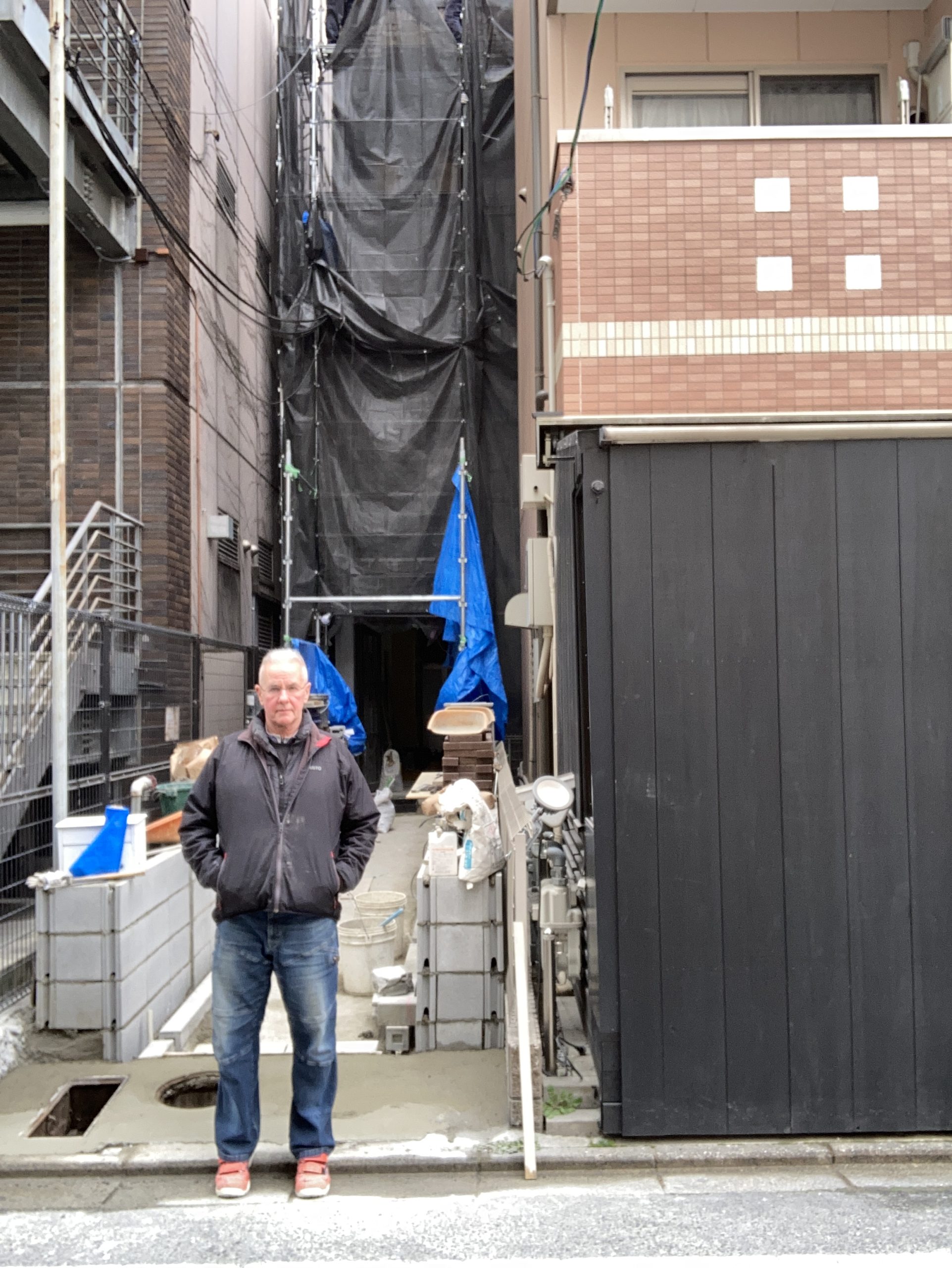
A Hyogo Prefecture case study exploring whether interest rate uncertainty justifies selling income-producing Japanese real estate at a significant discount. ...
Author : Mark Smith
The Japanese real estate market offers unique growth potential for investors. One of the most compelling aspects is the significant ...
Author : Mark Smith
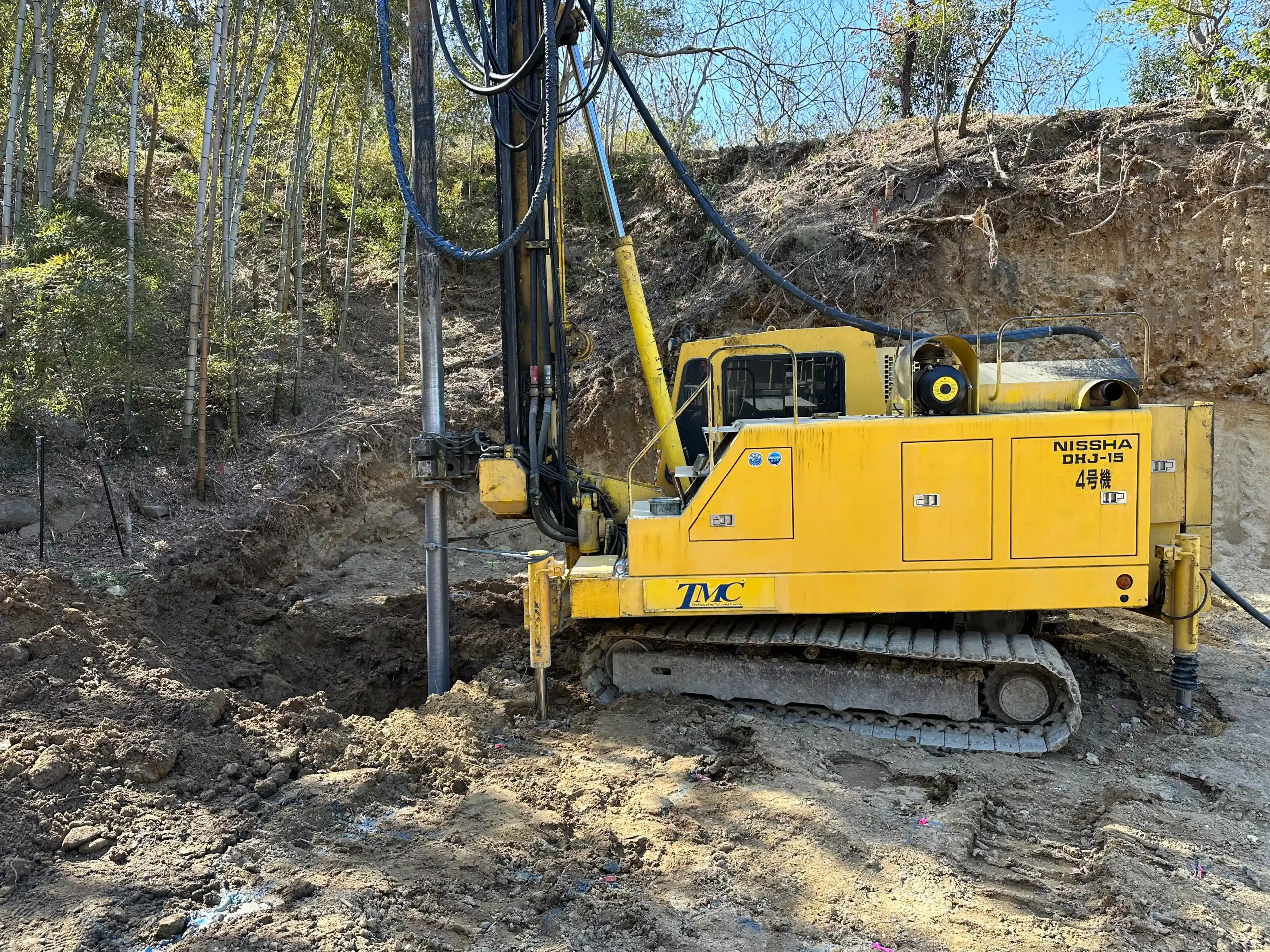
A geotechnical investigation , borehole testing or standard penetration testing , tells you what is beneath the surface before you ...
Author : Mark Smith
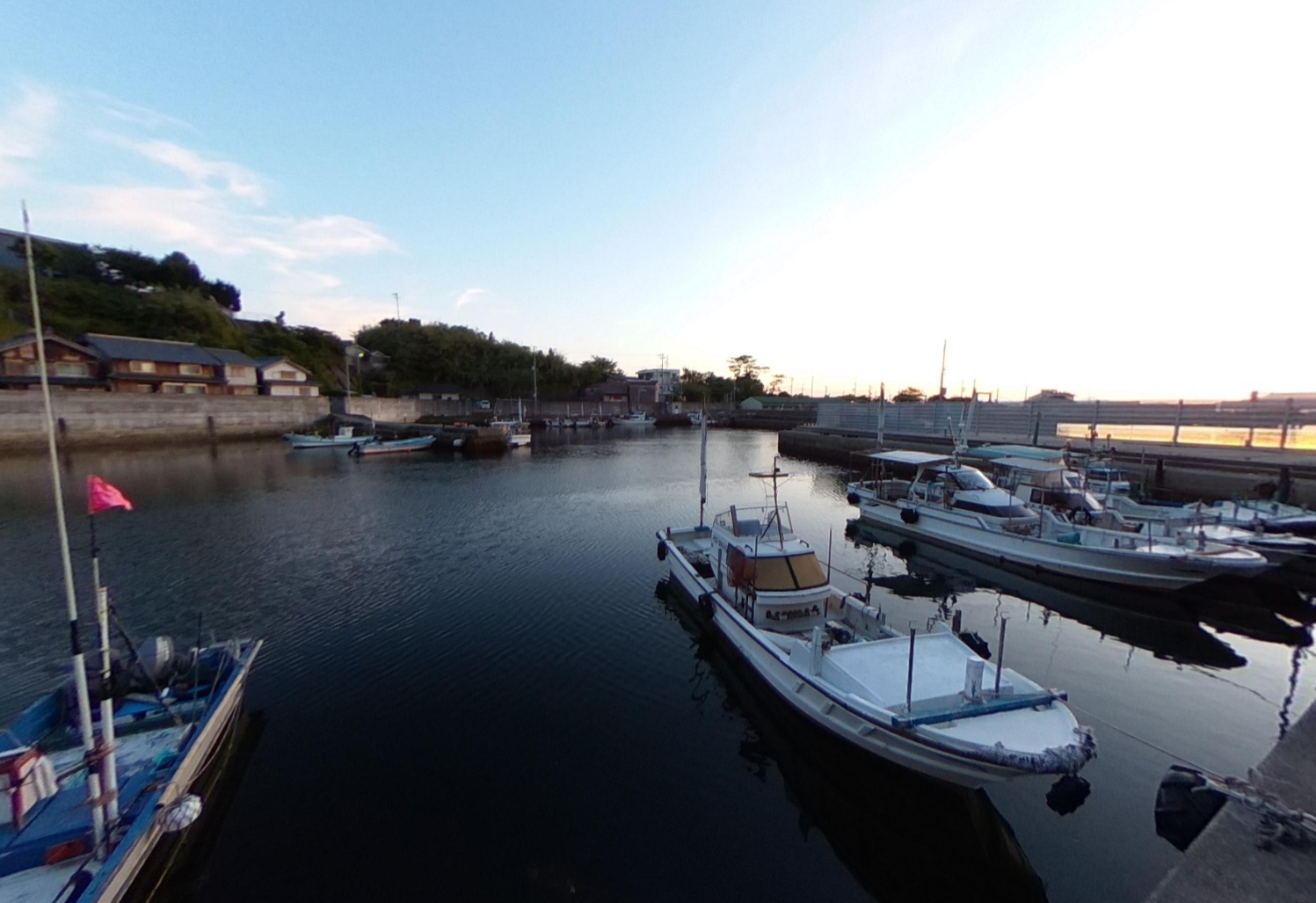
Just a short 10-minute ferry ride from Habu Ferry Terminal on Awaji Island's southern coast lies Nushima—a tranquil island sanctuary ...
Author : Mark Smith
If you’re intrigued by the idea of owning or restoring a minka, make sure to work with experts who can ...
Author : Mark Smith
Broad-based capital growth, the kind that rewards participation over selection, has been largely absent from suburban markets for more than ...
Author : Mark Smith